


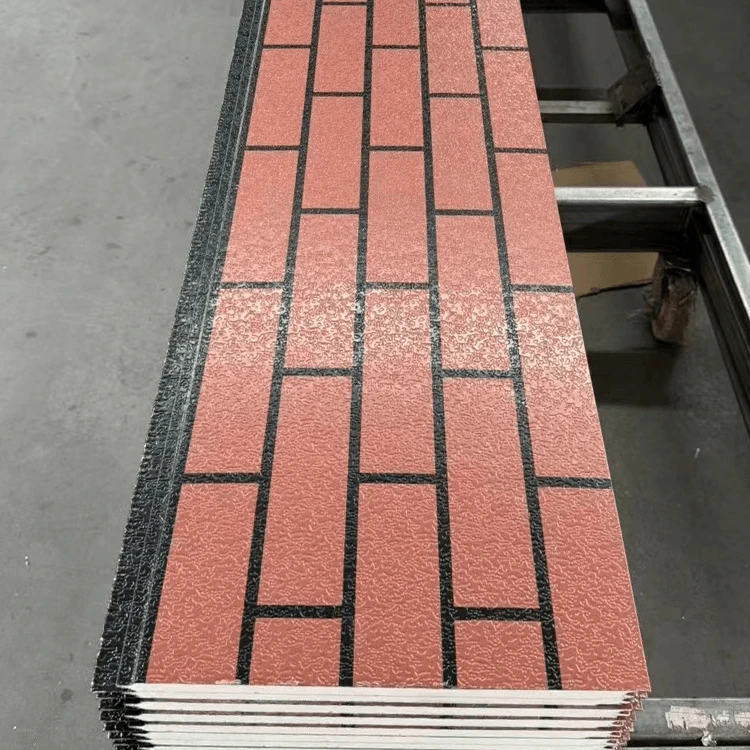
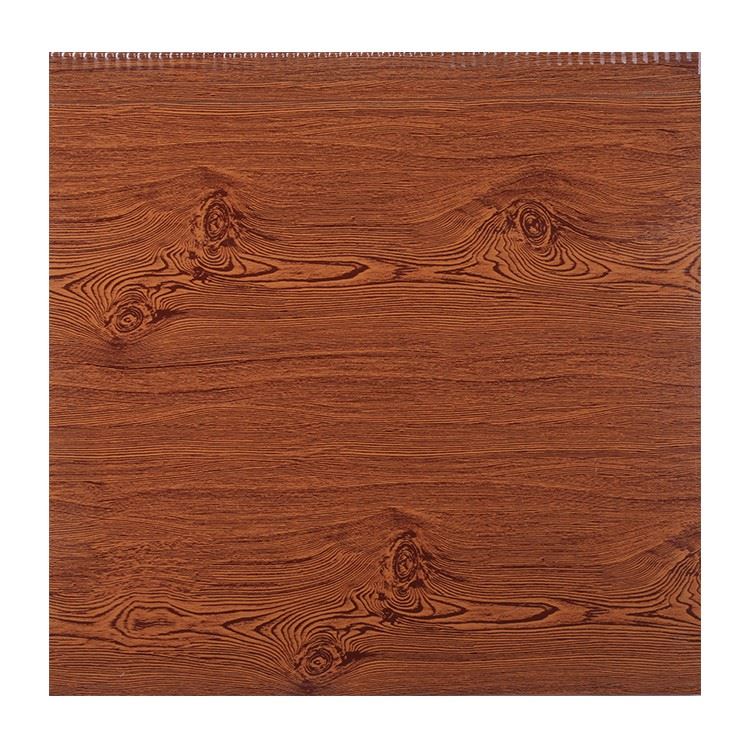
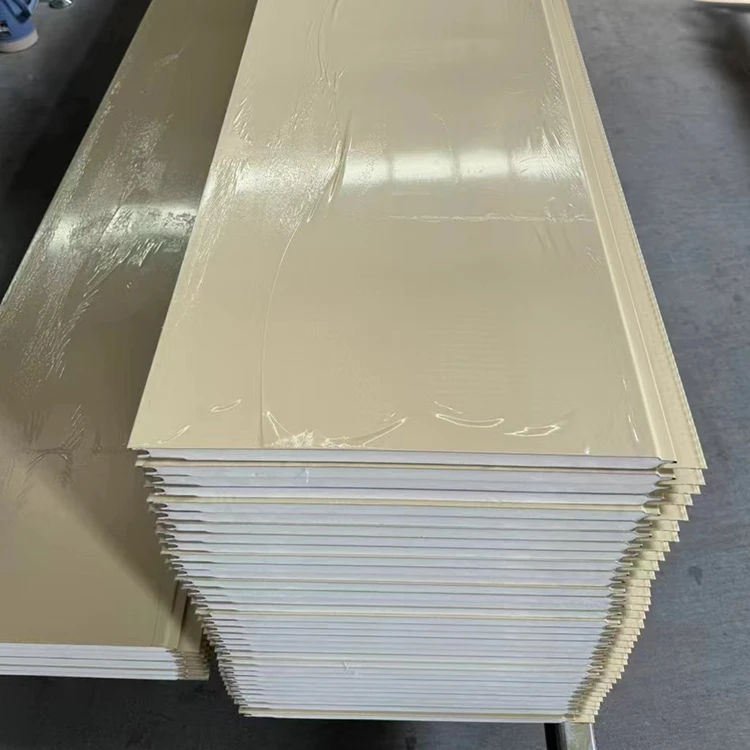
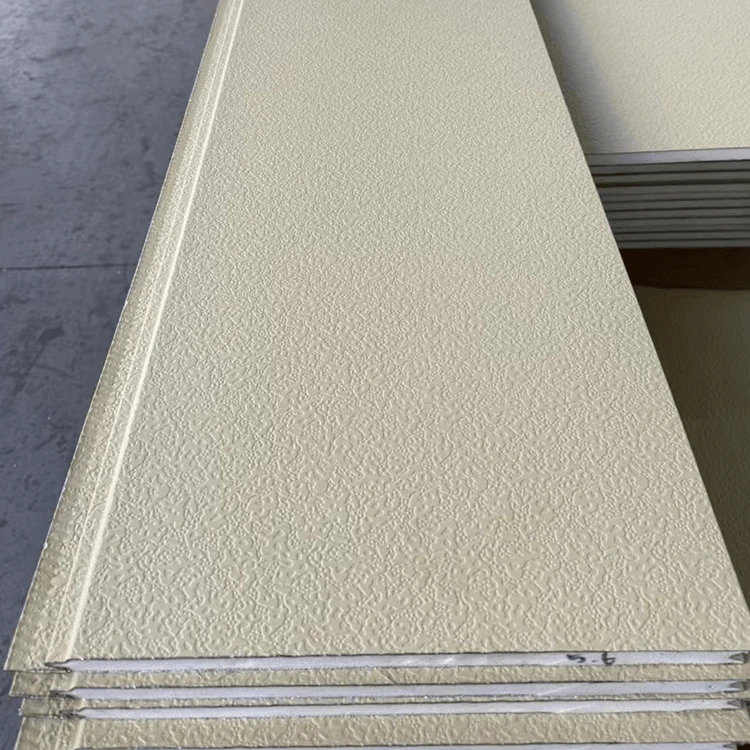
Pu Foam Insulated Metal Siding Panel
pu foam insulated metal siding panel are a composite material integrating thermal insulation performance, structural strength, and building envelope functions. As a composite panel, it possesses the advantages of multiple layers, combining the benefits of different surface layers for use on various levels.
Product Description and Advantages
pu foam insulated metal siding panel are a composite material integrating thermal insulation performance, structural strength, and building envelope functions. As a composite panel, it possesses the advantages of multiple layers, combining the benefits of different surface layers for use on various levels.
Outstanding Thermal Insulation
Because rigid PU foam itself has a low thermal conductivity, it effectively reduces heat transfer between indoors and outdoors, thereby reducing energy consumption in cooling or heating systems and making buildings more energy-efficient in the long run.
01
High-Efficiency Closed-Cell Structure
At the same time, the panel has a good closed-cell structure, making it difficult for moisture to enter the interior. Therefore, the material itself has excellent moisture resistance and anti-condensation capabilities, maintaining stable insulation performance even in low-temperature or high-humidity environments.
02
Structural Aspects
Through a continuous composite process, the metal panel and insulation core are firmly bonded together, resulting in lightweight properties, high bending strength, and overall stability, making it resistant to deformation under wind pressure or external impacts.
03
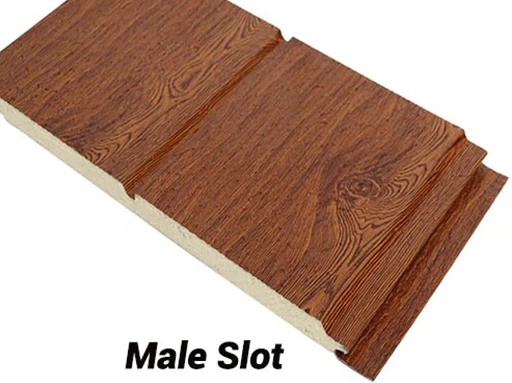
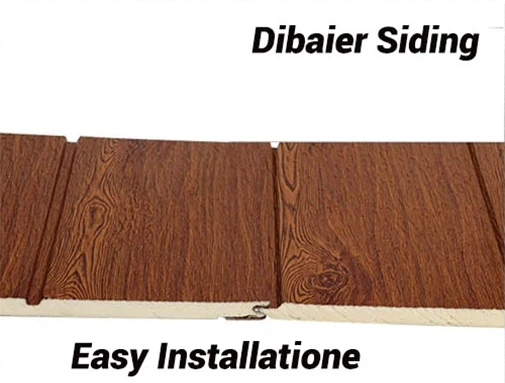
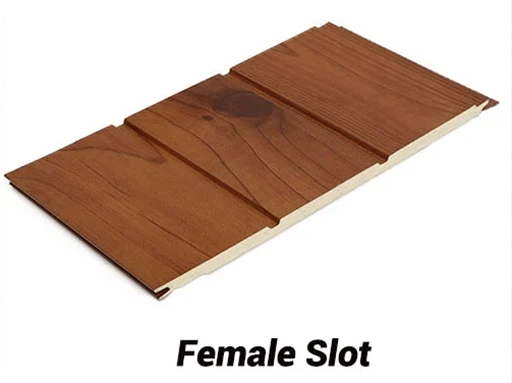
Convenient joint design
It typically uses tongue and groove or snap-lock structure, and is used in conjunction with sealing materials to effectively reduce air infiltration and heat loss, while also reducing thermal bridging effect, making the airtightness and energy-saving performance of the entire enclosure system more stable.
04

Will PU foam core material absorb water or age?
PU is one of the most widely used high-efficiency insulation materials on the market. Its closed-cell structure gives it excellent moisture resistance and long-term stability. Under normal design, production, and usage conditions, pu foam insulated metal siding panel can maintain good insulation performance for a long time.
Why doesn't it easily absorb water?
This rigid foam is composed of a large number of independent, closed microbubbles, forming a typical closed-cell structure. Compared to open-cell materials, moisture has difficulty penetrating its interior, resulting in a lower water absorption rate.
Therefore, this structure offers the following advantages:
Reduced impact of moisture penetration on insulation performance
Reduces the risk of condensation and dew
Maintains material dimensional stability
Improves long-term reliability
How to Calculate the Required Quantity of pu foam insulated metal siding panel for a Project?
Before you officially begin the project, you need to accurately calculate the required quantity of panels. This not only helps control project costs but also prevents panel waste. You can follow these steps:
Step 1: Calculate the Total Wall Area
First, you need to calculate the area of all wall surfaces where panels will be installed. Specifically, you can calculate it using: Wall Area = Wall Length × Wall Height. If the project includes multiple walls, you should calculate each area separately and then add them together to get the total area.
Step 2: Deduct Door, Window, and Opening Areas
For openings such as doors, windows, and ventilation openings, these should be deducted from the total area. Because these openings are not within the effective installation range, they should be removed.
Step 3: Determine the Effective Coverage Area of a Single Panel
This is the most important step because it requires combining the length and width of the panels and the overlap dimensions during installation to calculate the actual coverage area of a single panel. This includes horizontal and vertical overlaps and the effective coverage area.
Step 4: Calculate the Total Number of Panels Required
In this step, you need to divide the net wall area (excluding openings) by the effective coverage area of each panel, rounding up to obtain the minimum required quantity. It is recommended to add an extra 3%–5% as a wastage allowance.
Step 5: Allow for Waste
This is to ensure smooth installation of the panels in a single purchase, guaranteeing that all panels can be installed. Because some wastage usually occurs during transportation, cutting, and installation, it is recommended to add a spare quantity.
| Project Type | Recommended Waste Rate |
| Regular Buildings | 3%-5% |
| Complex Buildings | 5%-8% |
| Cold Storage Projects | 5%-10% |
Can pu foam insulated metal siding panel be installed horizontally or vertically?
The panels support both horizontal and vertical installation. The specific installation method needs to be determined based on your building structure, appearance design requirements, and construction conditions.
What is the difference between horizontal and vertical installation?
| Comparison of Items | Horizontal Installation | Vertical Installation |
| Visual Effect | Appears wider | Appears taller |
| Drainage Performance | Average | Facilitates faster rainwater drainage |
| Installation Efficiency | High | High |
| Number of Joints | Relatively fewer | Related to your building height |
| Suitable Buildings | Warehouses, factories, etc | High-rise factories, exhibition buildings, etc. |
How to Choose Horizontal or Vertical Installation?
Architectural Design:
If you want your building to appear wider and more stable, choose horizontal installation; if you want to enhance the height and modernity of your building, choose vertical installation.
Building Dimensions:
From an economic perspective, horizontal installation is generally more economical and more suitable for buildings with lower wall height and longer lengths; if you need to reduce horizontal joints, vertical installation is a better choice.
Drainage Needs:
If you live in an area with high global rainfall, we recommend vertical installation, as this helps reduce rainwater retention at the joints, allowing for longer use.
Rapid After-Sales Service
Throughout your pu foam insulated metal siding panel project, we consistently prioritize rapid after-sales response and technical support as crucial components of our service system. Whether during product installation or later use, we will initiate our after-sales response process immediately should you raise any issues.
Upon receiving your feedback, our after-sales specialist will promptly contact you to understand the specific usage of the panels, including the on-site installation environment, the time of the problem, and the specific abnormalities. This information will allow our technicians to accurately diagnose and conduct a preliminary analysis of the problem.
For common issues such as joint sealing and localized installation deviations, our technicians can provide remote service to help you promptly correct environmental adaptability problems and achieve complete repair and correction in the shortest possible time
Hot Tags: pu foam insulated metal siding panel, China pu foam insulated metal siding panel manufactures, suppliers, factory

