


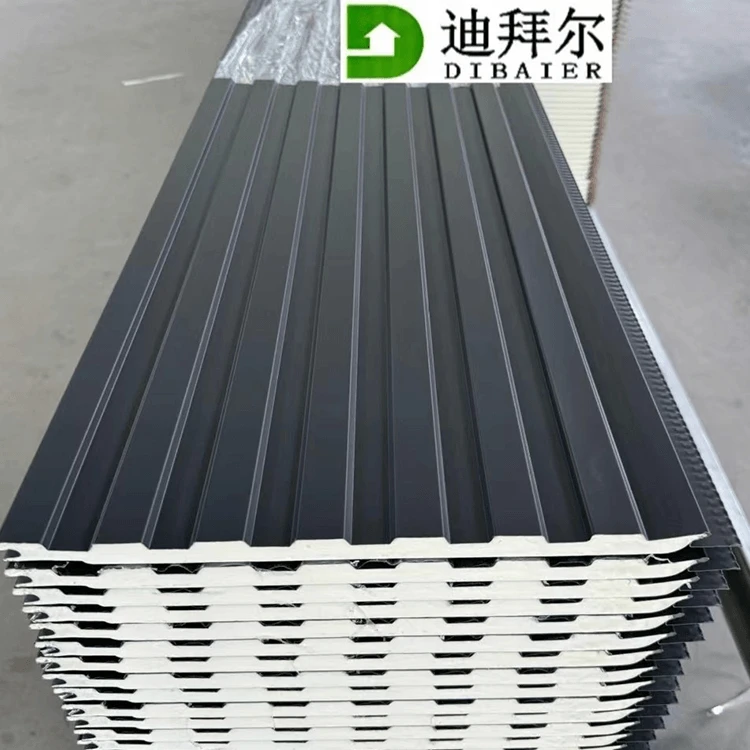
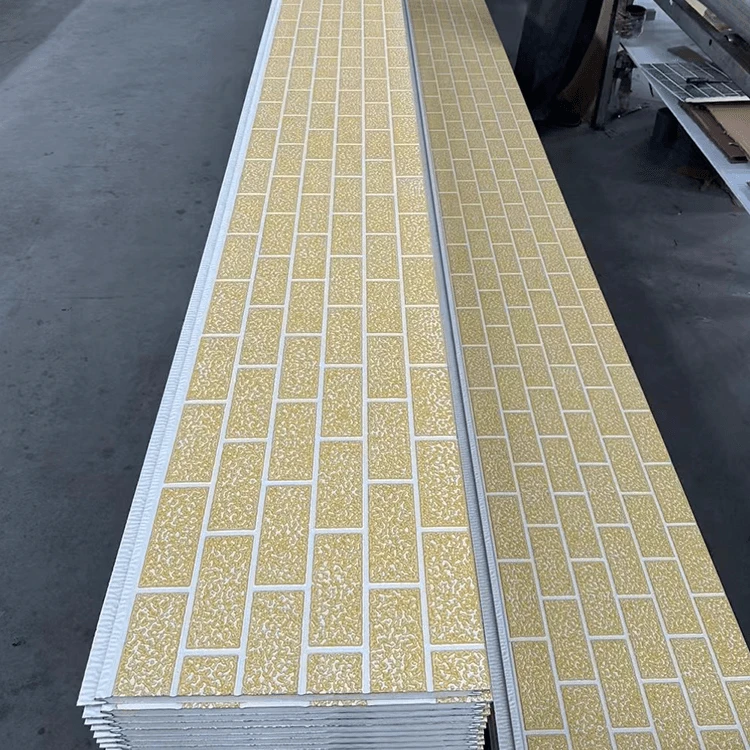
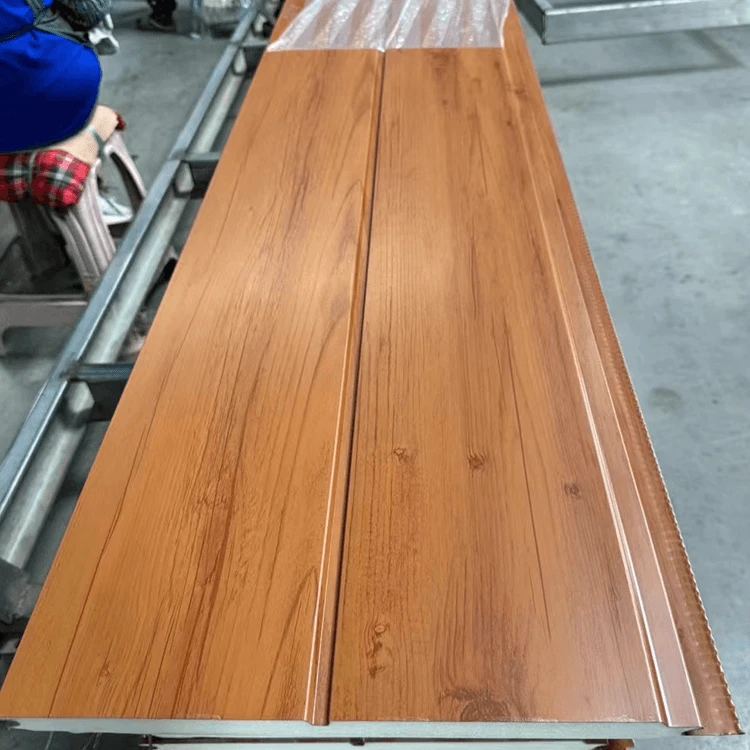
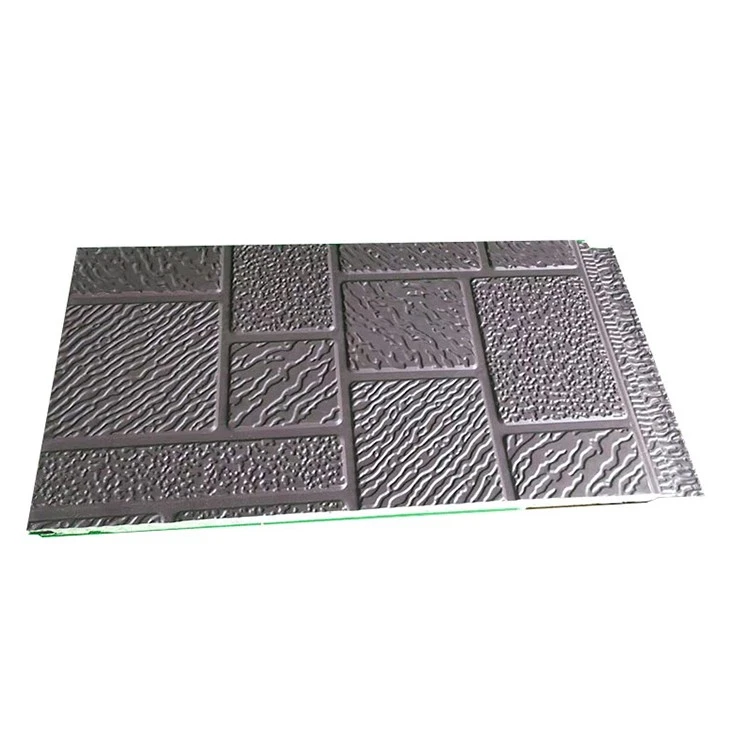
Fireproof Insulated Metal Cladding
The fireproof insulated metal cladding is optimized through a flame-retardant system design, meeting building insulation requirements while enhancing the overall safety performance of the building envelope. In high-risk scenarios such as industrial plants and warehouses, it serves as a crucial safety component of the building envelope system.
Core Performance
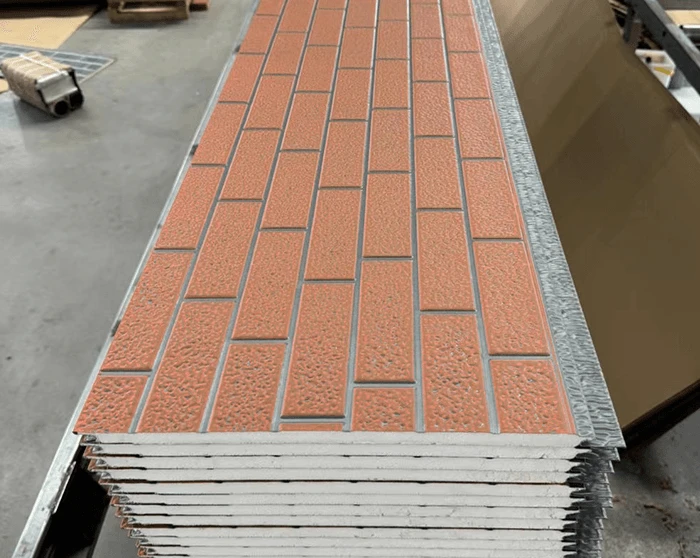
Stable Fire Resistance and Safety Foundation
The fireproof insulated metal cladding is optimized through a flame-retardant system design, meeting building insulation requirements while enhancing the overall safety performance of the building envelope. In high-risk scenarios such as industrial plants and warehouses, it serves as a crucial safety component of the building envelope system.
High Energy Efficiency
The core material has been tested and found to have a low thermal conductivity, reducing cooling load in summer and heat loss in winter, resulting in significantly reduced energy consumption and improved indoor temperature stability. The energy-saving benefits are particularly noticeable for large-scale industrial buildings.
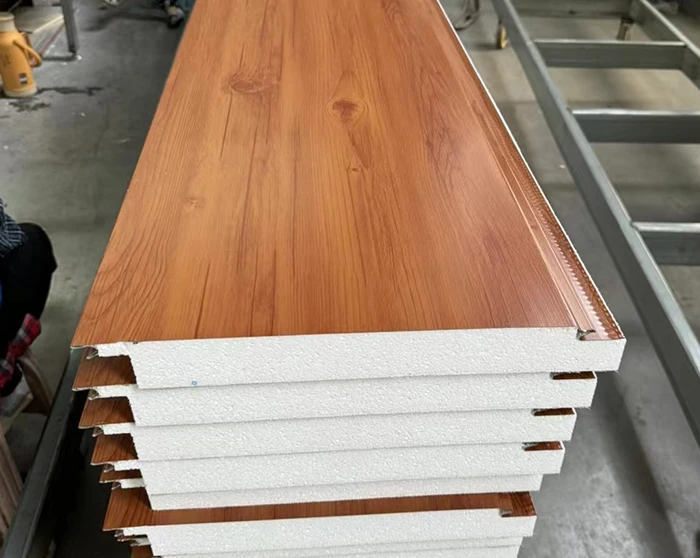
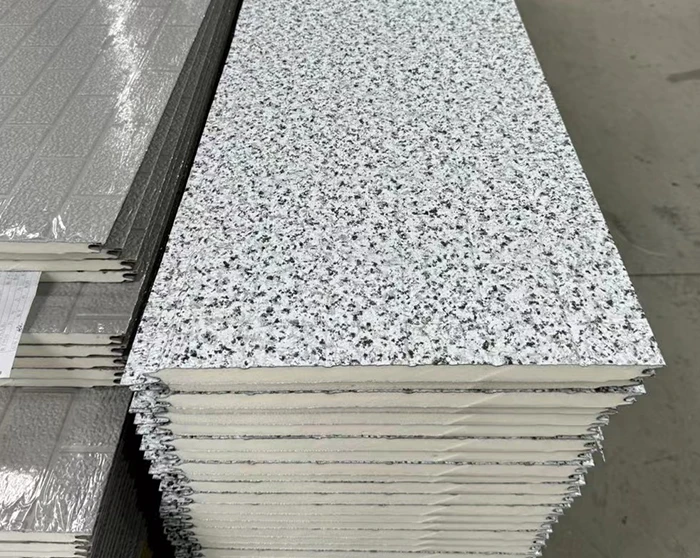
Balance of Structural Strength and Lightweight Design
The lightweight design is highly suitable for large-span building envelopes and possesses excellent compressive strength. This is highly beneficial for building designs requiring load reduction, resulting in better structural strength for the entire system.
Excellent moisture resistance and weather resistance
The board itself is composed of a "sandwich" structure, which has good weather resistance. The outermost layer is also a metal protective layer, which makes the material suitable for a variety of complex environments. It is not limited to high humidity areas, climate zones with large temperature differences, or industrial dust environments, and its performance will not degrade even after long-term use.
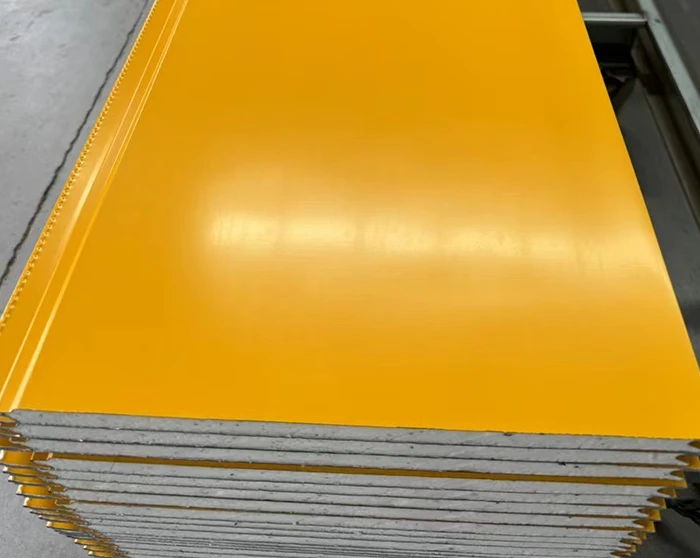
Common Mistakes in Installing fireproof insulated metal cladding
In the installation of panels for industrial buildings and steel structure enclosures, improper operation often leads to performance degradation and even later repairs. Below are some common mistakes our customers have made during actual installation; please try to avoid them in your own situation.
Improper Overlapping
If the longitudinal or transverse overlaps of the product are not fully fitted, or the edges are not properly locked, it will directly lead to decreased airtightness, increased heat loss, and a higher risk of rainwater seepage. The correct method is to strictly follow the design drawings or the purpose of the construction, ensuring that the length and width are consistent, and using dedicated fasteners to ensure a tight connection.
Fasteners Too Loose or Too Tight
If the fasteners are too loose, the panels will be prone to vibration and displacement; if they are too tight, they may damage the metal surface or destroy the waterproof structure. The correct method is to use torque control tools to ensure uniform and consistent fixing force.
Failure to Address Thermal Bridges
At the connection between the steel structure and the panels, if heat insulation is not applied, obvious thermal bridges will form. Specifically, this manifests as localized condensation, increased energy consumption, and a more pronounced temperature difference between the inside and outside of the wall. In this case, insulating gaskets are required.
Ignoring On-Site Environmental Factors
If construction is carried out in windy, high-humidity, or low-temperature environments without temporary protective measures, the installation quality will be lower compared to installation in sunny weather.
Wall Panel Leakage Problems and Solutions
Improper installation of fireproof insulated metal cladding can lead to leakage problems, a common quality issue in on-site projects.
I. Main Locations of Leakage
Leakage typically occurs at longitudinal joints of the panels, the finishing edges of door and window openings, the junction of the roof and wall, and fastener penetration points. These areas require reinforcement.
II. Analysis of Leakage Causes
1. Inadequate Overlapping Structures
If the joints are not fully interlocked or there are construction deviations during installation, rainwater is highly likely to seep in.
2. Sealing System Failure
Aging, peeling, or discontinuous application of sealant is also a major cause of long-term water seepage.
3. Condensation Misidentified as Seepage
In environments with large temperature differences, internal condensation may be mistaken for external seepage.
4. Inadequate Installation Slope or Drainage Design
Improper drainage paths at roof or facade corners can lead to water accumulation.
III. Solutions
Adopt double sealing or concealed overlapping structures to improve waterproofing reliability.
Select structural adhesives with strong weather resistance and suitable for metal systems.
Add waterproof tape or membranes as secondary protection at critical nodes.
Strictly control the alignment accuracy and fixing force of panels to avoid cumulative installation errors.
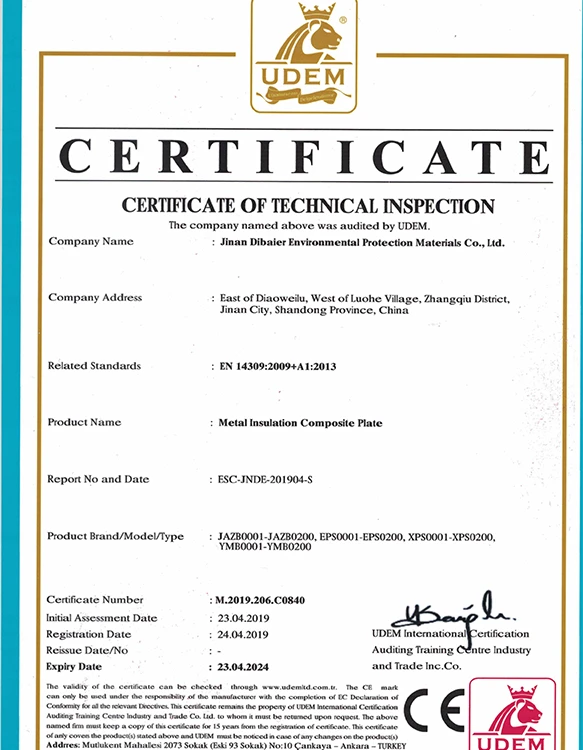
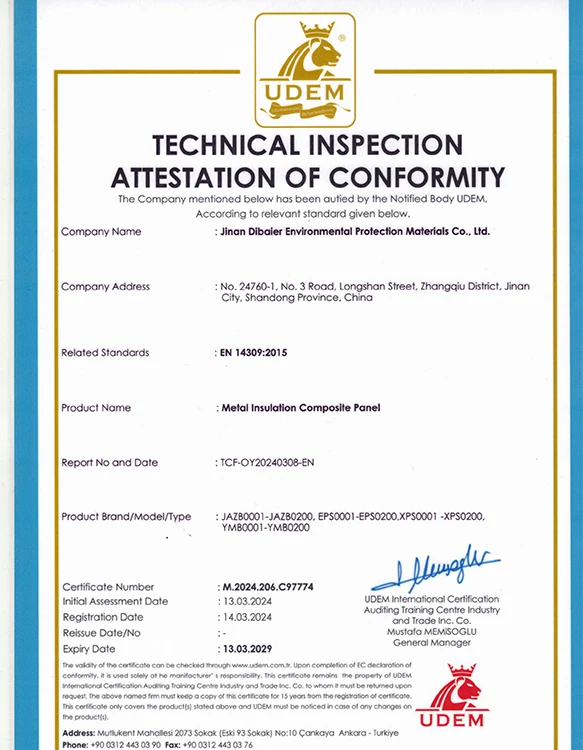
Certificate Display
Fixing Methods for fireproof insulated metal cladding on Irregular Steel Structures
In actual engineering projects, steel structures are not completely standardized designs, especially for industrial plants or renovation projects of old structures, where irregularities and significant variations are often encountered. Therefore, higher requirements are placed on the fixing of the cladding.
I. Main Installation Problems of Thermal Insulation Coating
Components are not on the same plane
Uneven spacing
Local tilting or deformation
Inability to standardize joint connections
II. Steel Structure Fixing Methods
1. Adjustable Support Keel System
You can use secondary steel keels or adjustable brackets to level the wall surface, creating a uniform installation surface. This allows for a flat wall installation.
2. Segmented Installation Fixing Method
You can also install wall panels according to structural sections, allowing each area to be individually corrected and fixed, thus reducing the accumulation of errors overall.
3. Flexible Connection Fixing System
If you use elastic gaskets or sliding joints at connection points and allow for a certain amount of structural deformation space, you can avoid stress concentration in the panels.
4. Custom Non-standard Cut Panels
Alternatively, you can perform secondary processing according to the actual structural dimensions on site, making the panels fit the structural contours better.
III. Key Points
Ensure keel leveling accuracy
Control even stress on the panels
Avoid forced stretching
Strengthen the fixing of key joints
Color Selection Guide
Besides insulation, fire resistance, and durability, color is also a crucial factor in creating a pleasant architectural experience. Choosing the right color for your fireproof insulated metal cladding can enhance the overall image of your building and better match the functional requirements of your project with the surrounding environment.
| Color Type | Recommended Color | Applicable Scenarios | Features |
| Light Colors | White, Off-white, Light Gray | Food factories, workshops, cold storage facilities, cleanrooms, etc. | Good sunlight reflection, reduces surface temperature, creates a clean and professional image. |
| Neutral Colors | Silver Gray, Dark Gray, Graphite Gray | Industrial plants, logistics warehouses, manufacturing workshops | Good stain resistance, modern industrial style, most widely used. |
| Dark Colors | Dark Blue, Dark Green, Dark Gray-Black | Office buildings, brand showrooms, etc. | Stable visual effect, enhances the building's prestige. |
| Customized Corporate Colors | Red, Blue, Orange, etc | Corporate headquarters, brand factories, exhibition centers | Consistent with your corporate image, enhances brand recognition. |
Hot Tags: fireproof insulated metal cladding, China fireproof insulated metal cladding manufactures, suppliers, factory

