


Metal Siding For Prefab House
metal siding for prefab house is becoming the go-to exterior wall solution for modular homes, container houses, and industrial-style architecture. What unique qualities make this material so indispensable? Let’s break them down:Significant wall weight reduction translates directly to lower foundation loads and allows for smaller beam and column cross-sections in the main steel frame. For prefabricated homes, this means not only material cost savings but also reduced steel consumption, less excavation work, and an improved overall structural safety factor.
metal siding for prefab house-- Five Key Features Making It a Top Choice
metal siding for prefab house is becoming the go-to exterior wall solution for modular homes, container houses, and industrial-style architecture. What unique qualities make this material so indispensable? Let's break them down:
Structural Advantages
Significant wall weight reduction translates directly to lower foundation loads and allows for smaller beam and column cross-sections in the main steel frame. For prefabricated homes, this means not only material cost savings but also reduced steel consumption, less excavation work, and an improved overall structural safety factor.
01
High-Precision Forming
Produced using continuous roll-forming or bending equipment, the panels maintain dimensional accuracy within ±1mm, with surface flatness far superior to common exterior wall materials. Length, width, and interlocking grooves are formed in a single pass via CNC equipment, ensuring minimal tolerance errors.
02
Waterproofing and Airtightness
The metal panels are completely non-absorbent. Combined with concealed clip or interlocking seam systems, they create a sealed wall structure with no exposed screws, eliminating the leakage risks associated with cracking in traditional plastered walls.
03
Wind Uplift and Impact Resistance
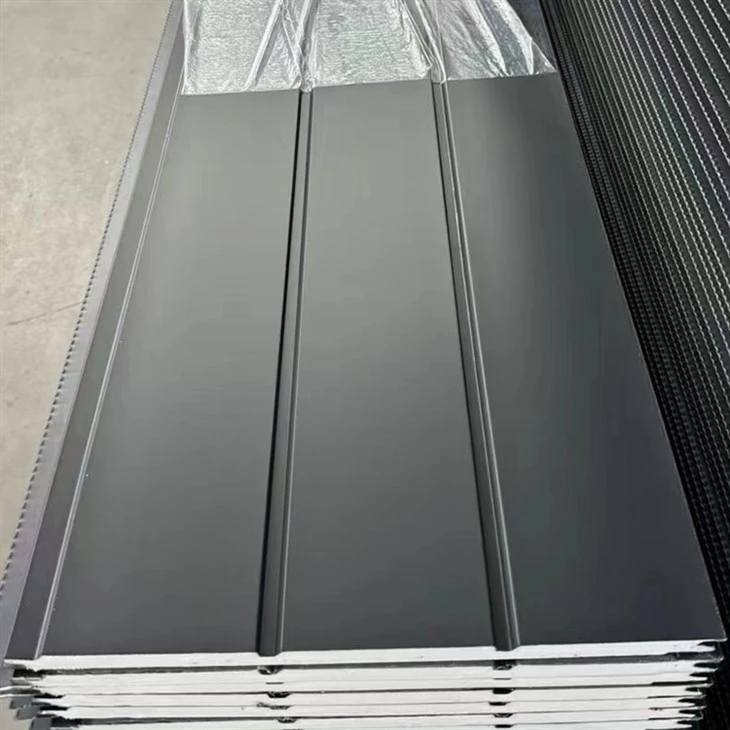
High-strength base material combined with a corrugated profile gives the siding exceptional wind pressure resistance, capable of withstanding typhoons exceeding Force 12. The surface also offers superior impact resistance, making it resistant to dents from hail or flying debris.
04
Versatile Profiles
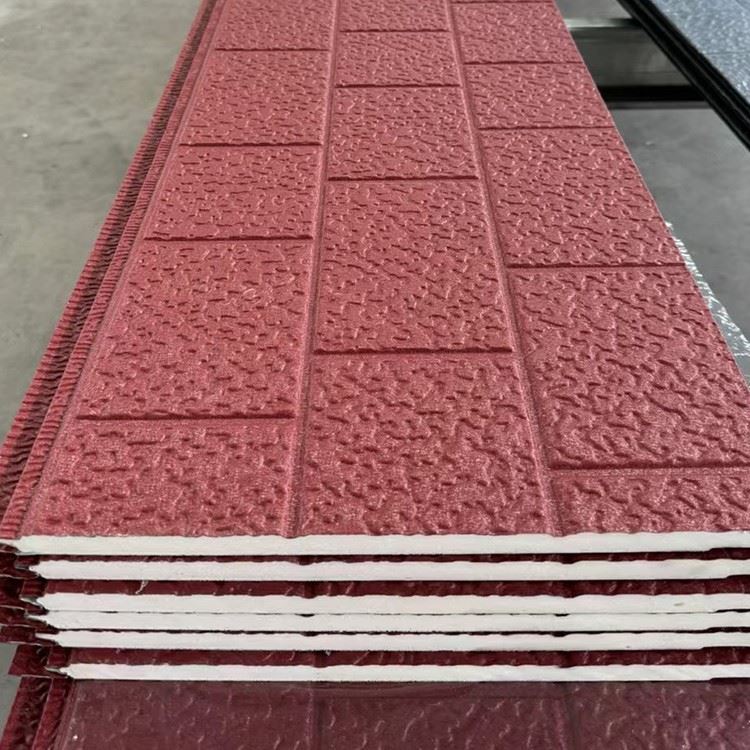
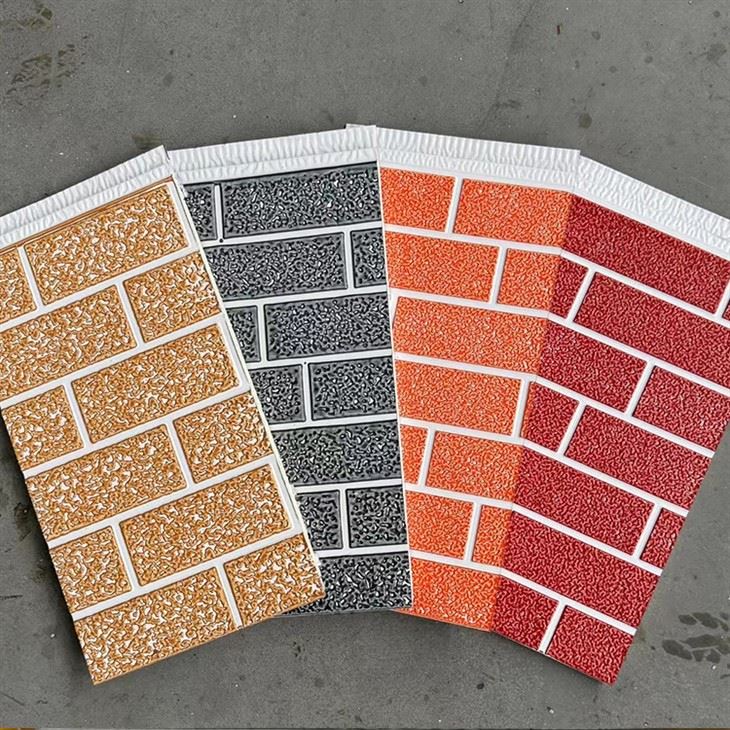
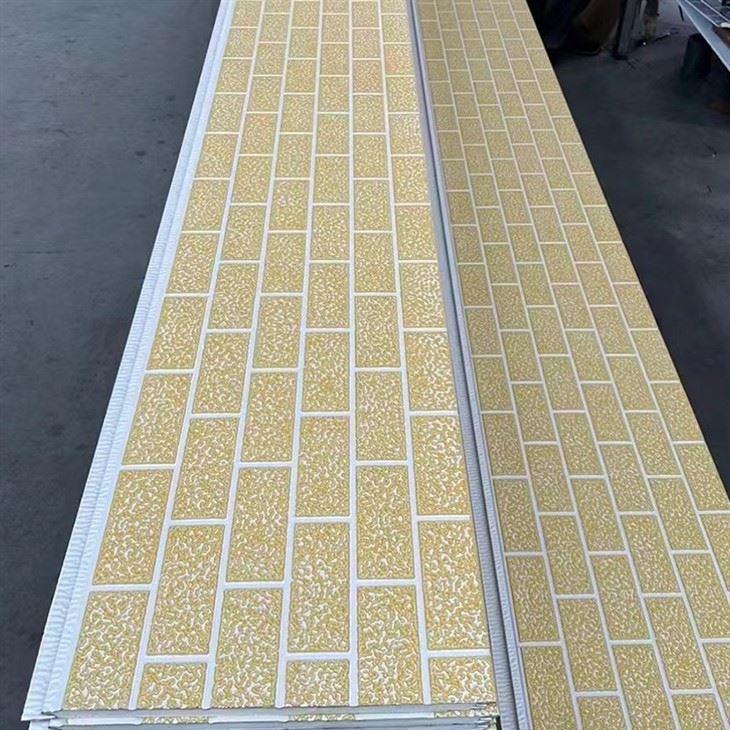
We offer a wide range of cross-sectional shapes-including corrugated, trapezoidal, horizontal, vertical, and faux-stone styles. These can be combined with custom width and length specifications to create modern, aesthetically striking facades.
05


How to Choose Between Exposed Fastener, Concealed Clip, and Interlocking Seam Systems?

Exposed Fastener System
Principle: Self-tapping screws penetrate the outer surface of the metal siding for prefab house directly, securing it to the purlins or framing.
Advantages: Fast installation, lower skill requirements for installers, and extremely convenient replacement of individual panels later on.
Suitable Applications: Temporary structures, low-budget warehouse perimeter walls, or non-residential prefabricated buildings where airtightness is not a strict requirement.

Concealed Clip System
Principle: Specialized clips are fastened to the purlins. The edges of the wall panels are specially roll-formed to interlock with these clips, completely hiding the screws within the panel seams so they remain unexposed.
Advantages: No exposed penetrations, eliminating the risk of leakage at fastener holes. The concealed clips allow for slight panel movement due to temperature fluctuations, effectively preventing deformation or tearing caused by excessive stress.
Suitable Applications: The vast majority of prefabricated homestays, modular homes, and office buildings.

Seamed Joint System
Principle: A specialized electric seaming machine mechanically interlocks the vertical edges of adjacent wall panels by 180 or 360 degrees, creating a completely continuous, seamless surface.
Advantages: The resulting connection is extremely strong, capable of withstanding typhoons exceeding Force 12. The surface is free of visible screws or fastener marks, presenting only clean, crisp vertical lines.
Suitable Applications: High-end prefabricated homes in high-wind or extreme climate zones, landmark public restrooms, or scenic area rest stations.
Analysis of Rust Causes and Preventive Measures
Rusting of metal siding for prefab house is a major safety concern for prefabricated buildings. Many clients wonder why rust spots appear shortly after installation, even when using galvanized or aluminum panels. In reality, rusting is rarely caused by the material alone; rather, it is the combined result of physical damage and environmental corrosion.
I. Core Causes
1. Physical scratches during handling and installation
Once the anti-corrosion coating on the panel surface is scratched by a sharp object, the underlying steel substrate is directly exposed to the air. An anodic zone forms at the scratch, making it highly susceptible to electrochemical corrosion.
2. Exposed edges at cuts and openings
When panels are cut or drilled on-site, the resulting edges often lack any protective coating. These areas are the weakest points of the entire structure and are the first to show signs of discoloration (yellowing). 3. Chemical Attack in Harsh Environments
Salt spray in coastal areas, acid rain in industrial parks, and acidic substances in bird droppings can all accelerate electrolytic reactions on metal surfaces. Additionally, if sealants containing copper or lead come into direct contact with aluminum panels, bimetallic corrosion (galvanic corrosion) may occur.
II. Maintenance Measures
1. Preventing Cut-Edge Rust: All edges cut and holes drilled on-site must be immediately sealed with a specialized anti-rust primer or cut-edge sealant; this step must never be postponed until the next day.
2. Preventing Iron Filing Contamination: After cutting operations, any residual iron filings on the panel surface must be thoroughly removed using a high-pressure water jet or a vacuum cleaner.
3. Preventing Impact Damage: Install rubber pads at contact points where scaffolding or tools touch the panels to avoid direct impact from hard objects.
4. Routine Maintenance: Clean the panel surfaces every six months using a neutral detergent and a soft cloth to remove accumulated dust, salt particles, and contaminants. Promptly clear fallen leaves from drainage channels and eaves to prevent them from rotting and corroding the metal over time.
Acceptance Procedures for metal siding for prefab house - Details to Check
| Check for color consistency using a standard light source | Do not evaluate color under natural light or warm yellow lighting; instead, use a standard light source to inspect the paint film for uniform thickness, as uneven thickness can cause visible variations in shade. |
| Bending test | Bend the panel and observe the bent area for large-scale coating peeling or significant whitening and cracking. |
| Cross-hatch test | Use a utility knife to score a dense 1mm × 1mm grid pattern into the coating surface, then apply clear adhesive tape firmly over the grid and rip it off sharply to test the coating's adhesion and cure quality. |
| Dimensional tolerance verification | Measure the sample to ensure the actual width matches the nominal width and check for diagonal deviation. Place the sample flat on a glass surface and press down on the corners to check for any warping or lifting. Please contact us immediately if any issues are found. |
Hot Tags: metal siding for prefab house, China metal siding for prefab house manufactures, suppliers, factory

